
| Functions |
|
|---|---|
| Structures |
|
For your massage practice
- The skin is the first tissue massage touches - its receptors turn pressure, stretch and warmth into signals the brain interprets as pleasant or unpleasant
- Check the skin as you work - do not massage over open wounds, burns, rashes, infections, recent bruising or areas of broken skin
- Australia has among the highest skin cancer rates in the world - if you notice a mole or spot that is new, changing, bleeding or unusual, tell the client and suggest they have it checked by their GP
- Ask about allergies and sensitive skin before choosing an oil or lotion, and stop if a rash appears
- Thin or fragile skin, common in older clients, tears and bruises easily - use more lubricant and less drag
Overview
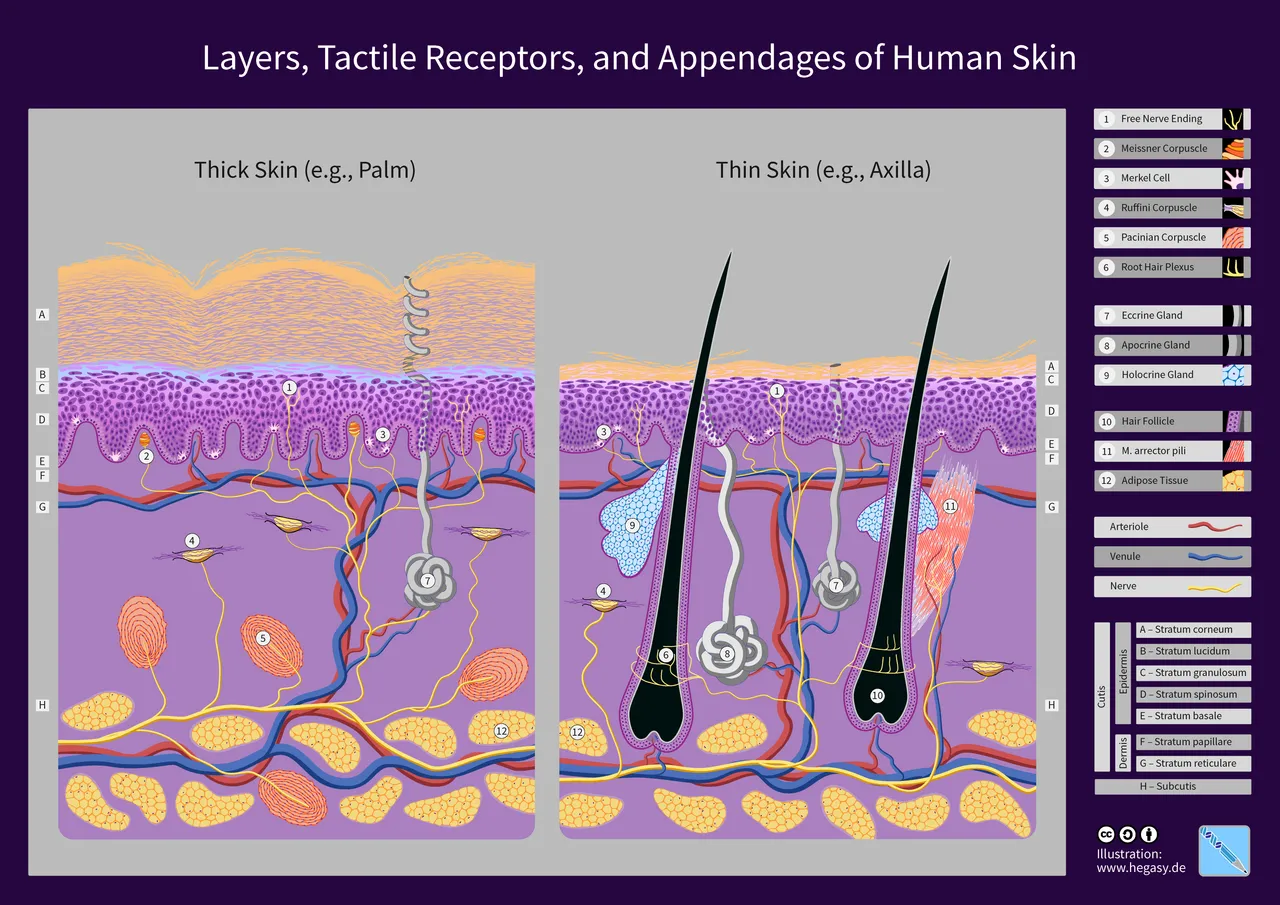
The integumentary system is the skin and the structures that grow from it: hair, nails, sweat glands and oil (sebaceous) glands. Skin is usually called the body’s largest organ; in an adult it covers about 1.5–2 square metres and makes up around 16% of body mass.
How it works
Skin has two main layers. The epidermis is the thin outer layer. Its cells are made at the bottom and move up to the surface, where they flatten, fill with keratin and flake off; melanocytes add pigment (melanin). The dermis underneath is tougher connective tissue holding blood vessels, nerve endings, hair roots and glands. Beneath the skin is the hypodermis (subcutaneous layer) of loose tissue and fat, which insulates and cushions and lets the skin slide over deeper tissues.
When the body is hot, dermal blood vessels widen and sweat glands release sweat, which cools the skin as it evaporates. When it is cold, the vessels narrow to save heat. Different receptors in the skin detect light touch, deep pressure, vibration, temperature and pain.
Relevance to massage
Every stroke starts at the skin. Lubricant choice, drag and the local reddening (Hyperaemia) after strokes such as Effleurage or Skin rolling are all skin effects. The skin’s receptors are also why slow, even touch can feel so calming.
The skin is also where you will most often find a Local contraindication: cuts, bruises, burns, rashes, fungal or bacterial infections, or recent scars. Work around them. Because skin cancer is so common in Australia, mention any new, changing or unusual spot to the client and suggest they see their GP; do not try to tell them what it is.
Key terms
- Epidermis / dermis / hypodermis: outer layer / deeper connective-tissue layer / fatty layer under the skin.
- Sebaceous gland: makes sebum, the skin’s natural oil.
- Melanocyte: cell that makes the pigment melanin.
Key terms
EpidermisDermisHypodermisSebaceous glandMelanocyteHyperaemiaLocal contraindication