
| Functions |
|
|---|---|
| Structures |
|
For your massage practice
- Offer the client the chance to use the toilet before the session so they can relax fully, especially before abdominal work
- The kidneys sit high on the back wall of the abdomen, partly protected only by the 11th and 12th ribs - avoid heavy percussion (tapotement) or deep pressure over the lower ribs and upper lumbar area
- Offer water after the session because clients often feel thirsty - but the idea that massage releases "toxins" the kidneys must flush out is not supported
- Clients with kidney disease may have fluid, blood pressure or skin changes - get medical clearance and adjust pressure
- Refer a client with pain in the flank, fever, pain when passing urine or blood in the urine to a doctor
Overview
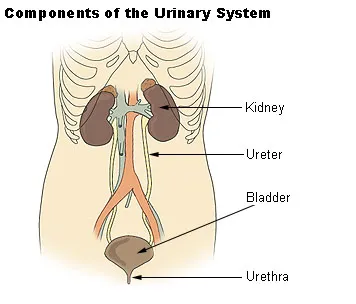
The urinary system is the body’s filter and fluid manager. It has two kidneys, two ureters, one bladder and one urethra. The kidneys sit high on the back wall of the abdomen, one each side of the spine, behind the lining of the abdominal cavity (retroperitoneal). Their upper parts are partly shielded by the 11th and 12th ribs.
How it works
Each kidney contains around a million nephrons. Blood is filtered under pressure, producing about 180 litres of filtrate a day. Almost all of that water, and useful substances such as glucose and salts, are reabsorbed, leaving about 1–2 litres of urine a day, depending on how much the person drinks, sweats and moves.
By adjusting how much water and salt they keep, the kidneys control blood volume and blood pressure. They also make hormones: renin (blood pressure), erythropoietin (red blood cell production) and the active form of vitamin D. Urine flows down the ureters to the bladder, which stores it until it is released through the urethra.
Relevance to massage
Practical comfort comes first: invite clients to use the toilet before a session, and offer water afterwards. Avoid vigorous percussion such as Hacking or Pounding over the lower ribs and upper lumbar area, where the kidneys sit close under the surface, particularly near Quadratus lumborum.
Be careful with common myths. Massage does not “release toxins” that need flushing out (see What massage research does and doesn't show). Clients with kidney disease need medical clearance. Pain in the flank with fever, pain on passing urine, or blood in the urine should be referred to a doctor.
Key terms
- Nephron: the kidney’s filtering unit.
- Filtration / reabsorption: removing fluid from blood / taking back what the body needs.
- Retroperitoneal: behind the lining of the abdominal cavity.
Key terms
KidneyNephronFiltrationUrineRetroperitoneal