
| Functions |
|
|---|---|
| Structures |
|
For your massage practice
- Lymph has no central pump - it relies on muscle contraction, breathing and the movement of the body; gentle, rhythmic strokes towards the nodes are thought to support its flow
- Specialised lymphatic drainage is a remedial skill beyond Cert IV relaxation massage
- Unexplained swelling in one limb, especially after cancer treatment or lymph node removal, may be lymphoedema - get medical clearance and do not use firm pressure on the limb
- Swollen, tender or hard lumps in the neck, armpit or groin should be referred to a GP, not massaged
- Postpone massage if the client has a fever or contagious infection, and keep up hand hygiene and clean linen for every client
Overview
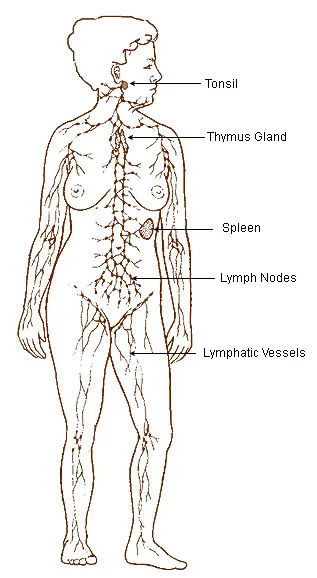
The lymphatic system and the immune system are closely linked, so they are taught together. The lymphatic system is a one-way drainage network of vessels and nodes. The immune system is the set of cells, tissues and organs that defend the body against germs and damaged cells. Many immune cells live in, and travel through, the lymphatic organs.
How it works
Each day about 20 litres of fluid filters out of blood capillaries into the tissues. Most is reabsorbed, but about 3 litres is collected by lymph capillaries and becomes Lymph. Lymph flows through larger vessels with one-way valves, passes through lymph nodes, and drains into the thoracic duct or right lymphatic duct, which empty into the subclavian veins near the collarbones. There is no pump like the heart: muscle contraction, breathing and contraction of the vessel walls keep lymph moving.
Immune defences come in two layers. Innate immunity is fast and general: skin and mucous membranes, inflammation, and white cells such as neutrophils and macrophages that engulf germs. Adaptive immunity is slower but targeted: lymphocytes (B cells, which make antibodies, and T cells, which mature in the thymus) learn to recognise a specific germ and remember it. That memory is the basis of vaccination.
Relevance to massage
Gentle, rhythmic strokes directed towards the lymph nodes are thought to support lymph flow, but the evidence for relaxation massage changing lymph flow in healthy people is limited (see The lymphatic system and massage). Manual lymphatic drainage for conditions such as lymphoedema is specialised work beyond Cert IV (see Lymphatic drainage (introduction)).
What matters most at this level is noticing when to hold back. Postpone massage for a fever or contagious illness. Do not press on swollen, hard or tender lymph nodes, and refer the client to their GP. Clients who have had lymph nodes removed or radiotherapy need medical clearance and a light touch on the affected side. Good infection control (see Manage the prevention and control of infection) protects both you and your clients.
Key terms
- Lymph: the clear fluid carried by lymph vessels.
- Lymph node: a small filter packed with immune cells.
- Lymphoedema: swelling caused by a damaged or blocked lymphatic system.
- Innate / adaptive immunity: general, immediate defence / targeted defence with memory.
Key terms
LymphLymph nodeLymphoedemaInnate and adaptive immunityLymphocyteInflammation