
| Functions |
|
|---|---|
| Structures |
|
For your massage practice
- Digestion is a "rest and digest" (parasympathetic) activity - relaxed clients often notice stomach gurgling, which is normal
- Avoid massage straight after a heavy meal; a light meal an hour or two before is more comfortable
- Abdominal massage is traditionally done clockwise (as viewed looking at the client), following the direction of the colon - use slow, gentle pressure and the client's consent
- Do not massage the abdomen during pregnancy (beyond Cert IV scope), after recent abdominal surgery, or if the client has abdominal pain, a hernia or feels nauseous
- Refer severe, persistent or unexplained abdominal pain, blood in stools, or a hard, swollen abdomen to a doctor
Overview
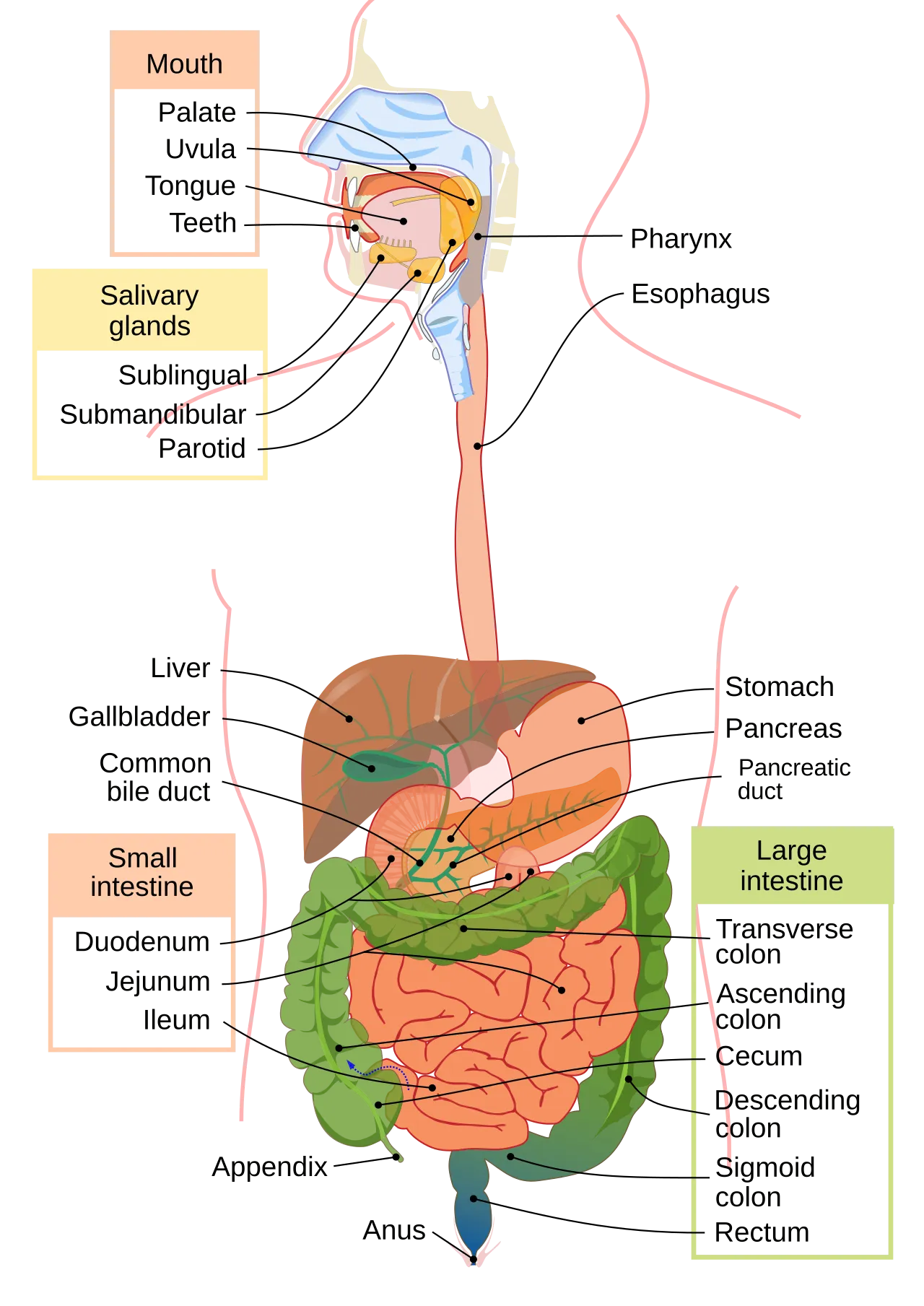
The digestive system is a long muscular tube, the gastrointestinal (GI) tract, running about 9 metres from mouth to anus, plus accessory organs that add digestive juices: the salivary glands, liver, gallbladder and pancreas. Its job is to turn food into molecules small enough to absorb, and to get rid of what is left.
How it works
Chewing and saliva start digestion. Swallowed food moves down the oesophagus by peristalsis, waves of smooth-muscle contraction that continue along the whole tract. The stomach churns food with acid and enzymes. In the small intestine (duodenum, jejunum and ileum), bile from the liver and gallbladder and enzymes from the pancreas finish the job, and most nutrients are absorbed; fats go into the lymph. The large intestine reabsorbs water and minerals and stores faeces until they are expelled.
The gut has its own network of nerves, the enteric nervous system, which can run much of digestion locally. The Parasympathetic nervous system system speeds digestion up and the sympathetic system slows it down, which is why stress can upset the stomach.
Relevance to massage
When a client relaxes, their digestion often becomes more active, and a gurgling stomach is a common, normal sign (see Relaxation and the parasympathetic response). Abdominal massage, when included (see Abdomen and chest — 15 min), is traditionally done slowly and clockwise, following the colon up the right side, across and down the left. Clients may find it soothing, but do not promise it will fix constipation or other gut problems.
Skip abdominal work if the client has just eaten a large meal, is pregnant, has had recent abdominal surgery, or has abdominal pain or a hernia. Refer anyone with severe or persistent abdominal pain or blood in their stools to a doctor.
Key terms
- GI tract: the continuous tube from mouth to anus.
- Peristalsis: waves of muscle contraction that move contents along.
- Accessory organs: salivary glands, liver, gallbladder and pancreas.
- Enteric nervous system: the nerve network in the gut wall.
Key terms
PeristalsisGastrointestinal (GI) tractAccessory digestive organsEnteric nervous systemAbsorption