
| Functions |
|
|---|---|
| Structures |
|
For your massage practice
- Massage causes a local, temporary increase in skin blood flow (redness, or hyperaemia) - claims that it greatly boosts deep circulation are not well supported
- Strokes on the limbs are traditionally directed towards the heart (centripetal), following venous return
- A calf that is painful, swollen, red or warm may be a deep vein thrombosis (DVT) - do not massage it; advise the client to see a doctor immediately
- Avoid direct pressure on varicose veins and check with a client's doctor if they have heart disease, uncontrolled blood pressure or take blood-thinning medication
- Clients may feel light-headed when they get up after lying down (a drop in blood pressure) - sit them up slowly and stay close
- Chest pain, trouble breathing or stroke signs are an emergency - call 000
Overview
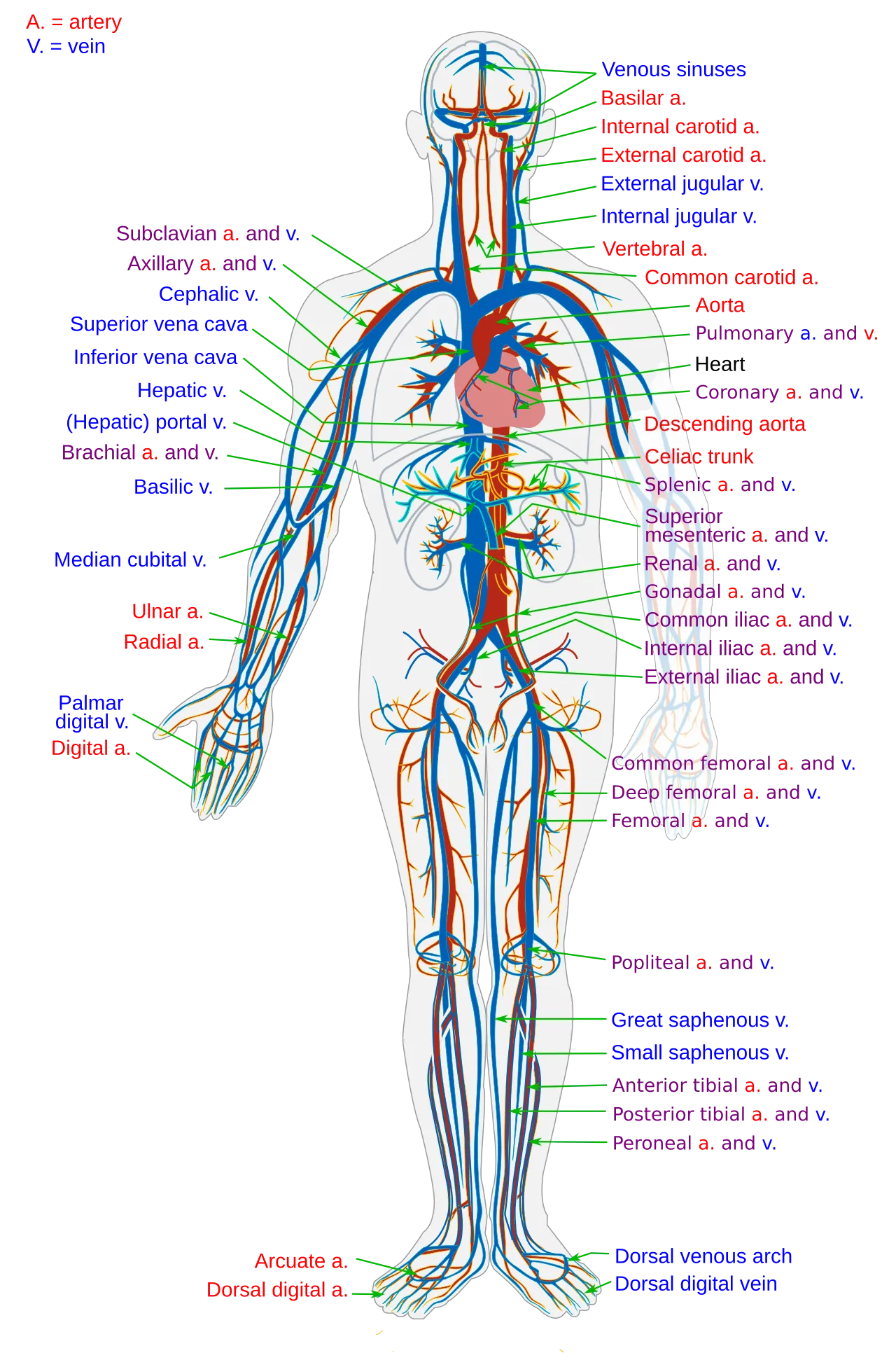
The cardiovascular (circulatory) system is the heart, the blood vessels and the blood. An adult has roughly 5 litres of blood. The heart pumps it through two loops: the pulmonary circulation to the lungs and back, and the systemic circulation to the rest of the body and back. At rest an adult heart beats on average about 72 times a minute, though a healthy rate varies from person to person.
How it works
The right side of the heart receives oxygen-poor blood from the body and pumps it to the lungs. The left side receives oxygen-rich blood from the lungs and pumps it out through the aorta. Valves keep blood moving one way. Arteries branch into arterioles and then capillaries, whose thin walls let oxygen, nutrients and wastes pass to and from the tissues. Capillaries join into venules and veins, which return blood to the heart.
Blood pressure is high in arteries and low in veins. In the legs, veins rely on one-way valves and the squeeze of working muscles (the “muscle pump”) to return blood to the heart. This is called Venous return. Some fluid leaks out of the capillaries into the tissues and is returned by the lymphatic system.
Relevance to massage
Massage produces a visible local Hyperaemia (reddening) of the skin. Traditionally, Effleurage on the limbs is directed towards the heart (Centripetal). The idea that massage strongly increases deep blood flow or “flushes” muscles is not well supported; see Circulation and blood flow for the evidence.
The main safety issue is clots. A painful, swollen, red or warm calf or thigh could be a deep vein thrombosis, and massage could dislodge the clot. Do not massage the area and advise the client to see a doctor straight away. Avoid pressure over varicose veins, get medical clearance for serious heart conditions, and help clients sit up slowly at the end of a session.
Key terms
- Artery / vein / capillary: away from the heart / back to the heart / exchange vessel.
- Venous return: blood flowing back to the heart.
- Hyperaemia: increased blood in an area, seen as redness.
- DVT: a clot in a deep vein, usually in the leg.
Key terms
Pulmonary and systemic circulationArtery, vein and capillaryVenous returnBlood pressureHeart rateHyperaemiaDeep vein thrombosis (DVT)