
| Functions |
|
|---|---|
| Structures |
|
For your massage practice
- The treatment room engages every sense - adjust lighting, music volume, room smell and temperature to what the client finds relaxing
- Some clients are sensitive to scents; ask before using fragranced oils and keep essential oils mild or leave them out
- The inner ear and blood pressure both affect balance - clients may feel dizzy when they sit up or stand after lying down, so let them rise slowly and stay nearby
- Avoid pressure on the eyes, and check the face cradle does not press on them; ask clients to remove contact lenses if they want face work or will lie prone for long
- Clients with hearing or vision loss may need changed communication, such as agreeing on touch cues or speaking face to face before the session
- Refer sudden changes in vision or hearing, or new severe dizziness, to a doctor
Overview
The special senses are the ones with dedicated organs: vision (eyes), hearing and balance (ears), taste (tongue) and smell (nose). They differ from the general senses such as touch, pressure, vibration, temperature, pain and Proprioception, whose receptors are spread through the skin, muscles and joints. Massage mainly works through the general senses, but the special senses shape the whole experience of a treatment.
How it works
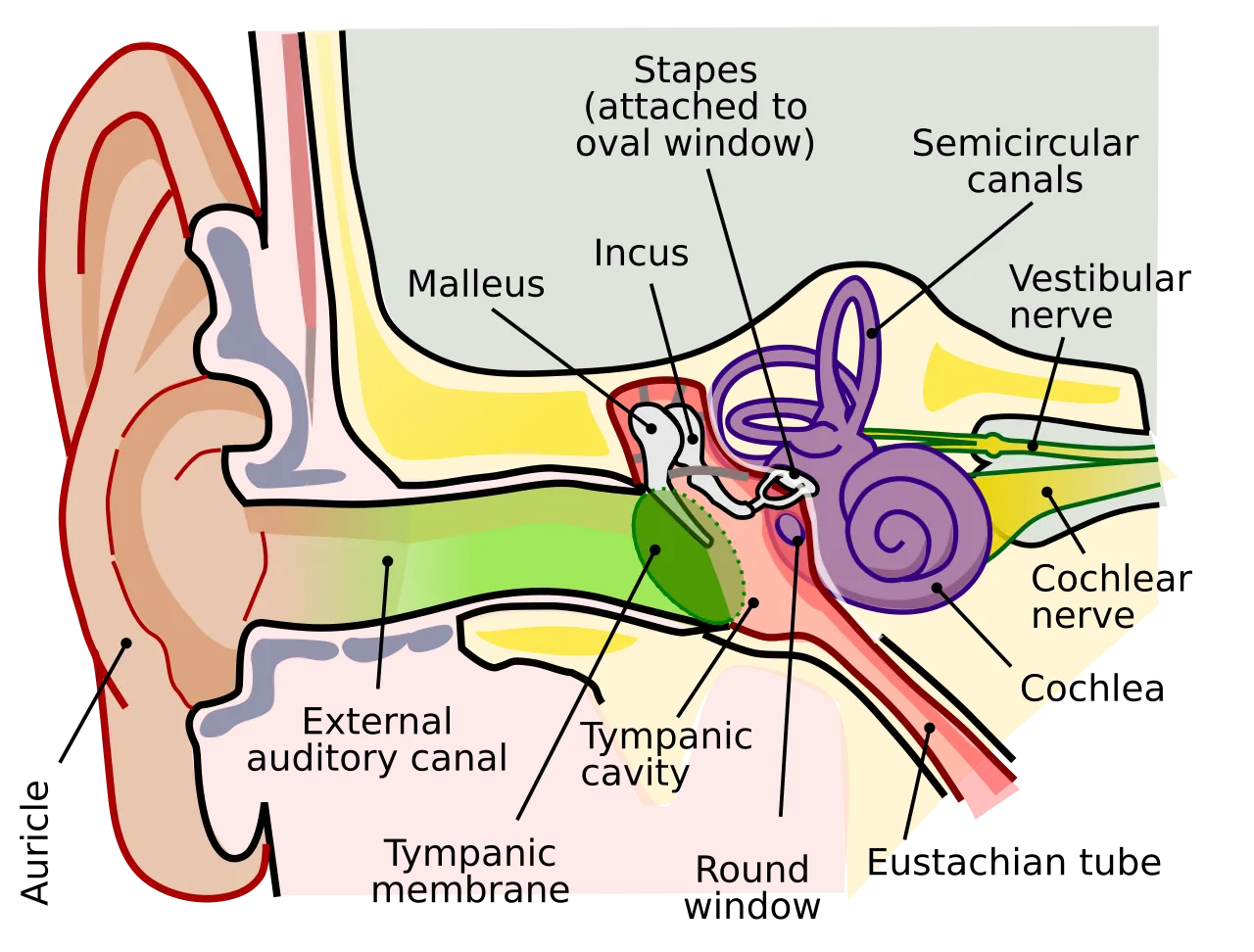
In the eye, light is focused by the cornea and lens onto the retina, where photoreceptors turn it into nerve signals carried by the optic nerve. In the ear, sound vibrates the eardrum and three tiny bones (ossicles), which pass the vibration to the fluid-filled cochlea. Next to the cochlea, the vestibular apparatus senses balance: the utricle and saccule sense head position, and the semicircular canals sense head movement.
Taste and smell are chemical senses. Taste buds detect sweet, salty, sour, bitter and umami; smell receptors high in the nose detect airborne molecules. What we call “flavour” is taste and smell combined.
Relevance to massage
A relaxing session engages every sense: soft lighting, quiet music, a neutral or pleasant smell and a comfortable temperature all help clients settle (see Psychological effects of massage). Because smell is so personal, ask before using scented products.
Balance matters at the end of a session. After lying still, some clients feel dizzy or light-headed when they sit up, so let them rise slowly and stay close. Keep pressure off the eyes during face work (see Head, face and scalp — 20 min) and in the face cradle. Agree on communication with clients who have hearing or vision loss before starting. Sudden changes in sight or hearing, or new severe dizziness, need medical attention.
Key terms
- Special senses: vision, hearing, balance, taste and smell.
- Photoreceptor: a light-sensitive cell in the retina.
- Cochlea: the hearing organ of the inner ear.
- Vestibular system: the balance organs of the inner ear.
Key terms
Special senses and general sensesPhotoreceptorCochleaVestibular systemOlfaction and gustationProprioception