
| Functions |
|
|---|---|
| Structures |
|
For your massage practice
- The genitals and breast tissue are never massaged in professional massage - draping and informed consent protect the client and you
- Work near sensitive areas (inner thigh, gluteals, upper chest, abdomen) only with clear consent and secure draping, and check in about comfort
- Pregnancy changes positioning and comfort; pregnancy massage is a specialised skill beyond Cert IV relaxation massage, so get medical clearance and training first
- Clients may have lower back or abdominal discomfort around menstruation - ask about comfort and positioning rather than assuming
- Unexplained lumps (for example in the breast or testes), abnormal bleeding or pelvic pain should be referred to a GP
Overview
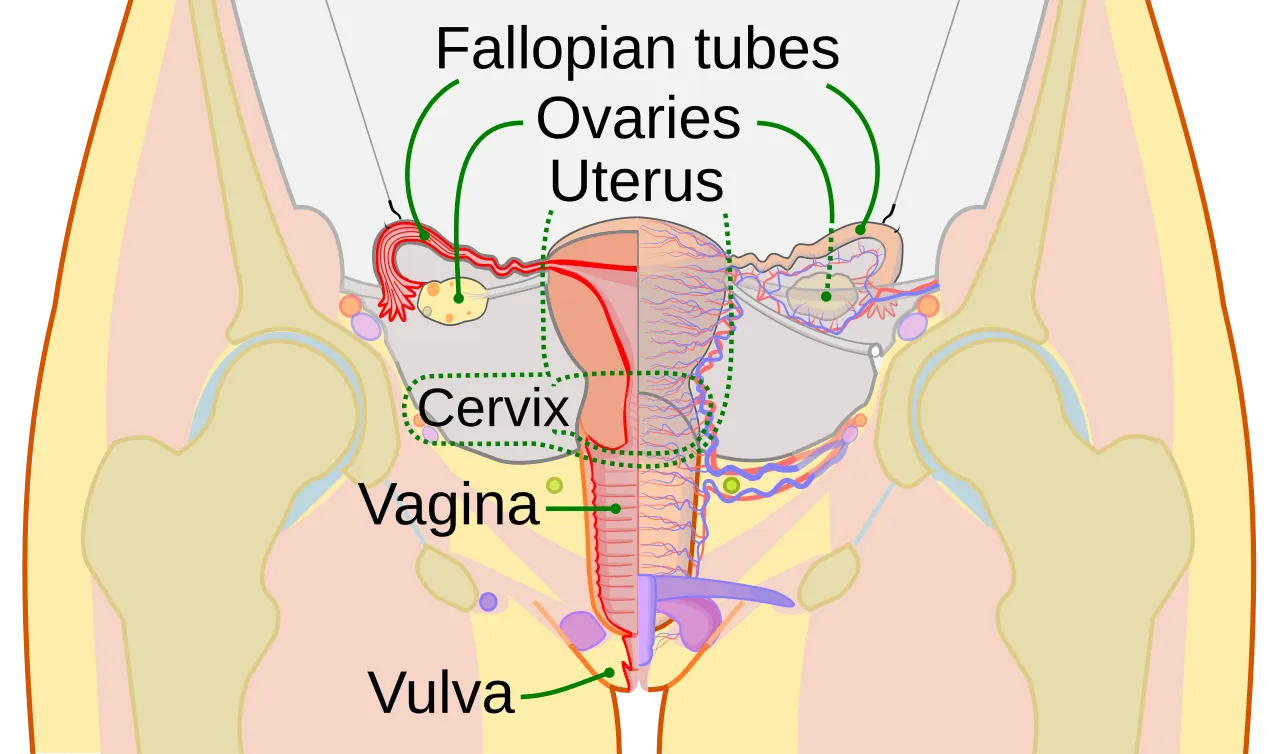
The reproductive system makes the cells and hormones needed to have children. The gonads are the ovaries and testes. The female system includes the ovaries, uterine (fallopian) tubes, uterus, cervix and vagina, with the breasts as accessory organs for feeding a baby. The male system includes the testes, a series of ducts (epididymis and vas deferens), glands that add fluid (prostate, seminal vesicles and bulbourethral glands) and the penis.
How it works
The ovaries release an egg roughly once a month and produce oestrogen and progesterone, which prepare the lining of the uterus. If the egg is not fertilised, the lining is shed as a period (menstruation). If it is fertilised, the embryo implants in the uterine wall and grows there during pregnancy. The testes make sperm continuously and produce testosterone.
These hormones are controlled by the hypothalamus and pituitary gland, so the reproductive system is closely tied to the endocrine system. They also drive the body changes of puberty.
Relevance to massage
For a massage therapist, this system is mostly about professional boundaries. The genitals and breast tissue are never part of a professional massage. Areas near them, such as the inner thigh, gluteals, upper chest and abdomen, need specific Informed consent and secure Draping (see Draping and room set-up). Always work within your Scope of practice.
Pregnancy changes how a client can lie and what is comfortable; many are more comfortable Side-lying later in pregnancy. Pregnancy massage is specialised training beyond this course, so check for medical clearance. Refer unexplained lumps, abnormal bleeding or pelvic pain to a GP.
Key terms
- Gonads: ovaries and testes.
- Gamete: a sex cell (egg or sperm).
- Menstrual cycle: the roughly monthly hormone cycle that prepares the uterus.
Key terms
Gonads (ovaries and testes)GameteOestrogen, progesterone and testosteroneMenstrual cycleInformed consentDraping