
| Functions |
|
|---|---|
| Structures |
|
For your massage practice
- Clients with diabetes may have reduced sensation in the feet and slower healing - check the feet, use lighter pressure and avoid broken skin
- Keep a sugary drink or snack handy for clients with diabetes, and know the signs of low blood sugar (shaky, sweaty, confused)
- Claims that massage "balances hormones" or reliably lowers cortisol are not supported by good evidence - describe massage as relaxing, not as hormone therapy
- Thyroid conditions can affect energy, weight, temperature tolerance and skin - adjust room temperature and pressure to comfort
- Refer a client with unexplained tiredness, thirst, weight change or a neck lump to their GP
Overview
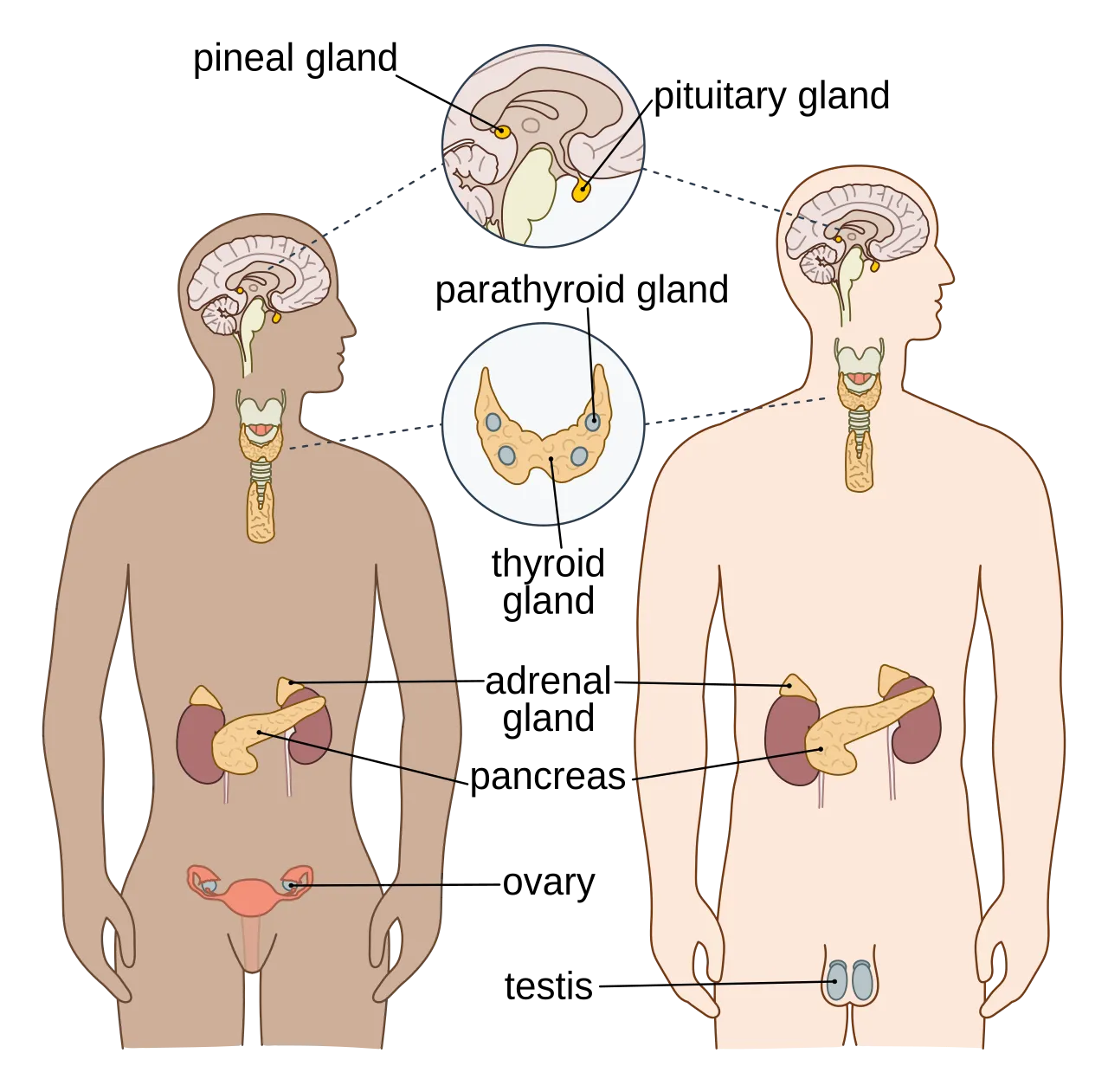
The endocrine system is made of ductless glands that release chemical messengers called hormones straight into the blood. The nervous system sends fast, short signals; the endocrine system sends slower signals whose effects last minutes to years. The main glands are the hypothalamus, pituitary, thyroid, parathyroids, adrenals, pancreas, pineal gland, ovaries and testes. Other organs, such as the kidneys, also make hormones.
How it works
A hormone travels in the blood but only affects cells with the right receptor. Most hormone levels are controlled by negative feedback: when a level rises, the gland is told to release less, a bit like a thermostat. The hypothalamus in the brain sits at the top of many of these loops and controls the pituitary, which in turn controls the thyroid, adrenal glands and gonads.
The stress response shows the nervous and endocrine systems working together. The Sympathetic nervous system nervous system triggers adrenaline from the adrenal glands within seconds, and the hypothalamic-pituitary-adrenal (HPA) axis raises cortisol over minutes to hours.
Relevance to massage
Massage is often described as reducing “stress hormones”, but a review of the research found the effect on cortisol was very small and mostly indistinguishable from zero (see What massage research does and doesn't show). It is honest to say massage helps many people feel calmer (see Psychological effects of massage); it is not honest to promise it balances hormones.
The most common endocrine condition you will meet is diabetes. It can reduce feeling in the feet and slow healing, so check the skin, adjust pressure and ask the client to tell you if anything feels wrong. Know the signs of low blood sugar and keep something sweet available. Refer clients with unexplained symptoms such as a lump in the neck, extreme thirst or big weight changes to their GP.
Key terms
- Hormone: a chemical messenger carried in the blood.
- Negative feedback: a rise in a level switches off its own production.
- HPA axis: the hypothalamus-pituitary-adrenal chain that controls cortisol.
- Insulin: pancreatic hormone that lowers blood glucose.
Key terms
HormoneEndocrine gland (ductless)Negative feedbackHypothalamic-pituitary-adrenal (HPA) axisInsulinCortisol